
Before you look at AI call answering, you want to know the cost. Here is the honest breakdown — what you pay, what you save, and what each missed call is really costing you right now.
What costs more: AI call answering or the calls I'm already missing?
Before we talk about what AI call answering costs, let us talk about what your current setup costs you right now. Because you are already paying for missed calls — you just do not see the invoice.
Every missed call is a job that went to the next contractor who picked up. Pull your phone logs for the last 90 days, count the rings that went to voicemail or hung up, and multiply by your average job value. That is the revenue you are losing every month by not having a system.
That is your current cost. Not of a system — of not having one. Every month you operate without call recovery, you are paying for it in lost jobs. The question is not whether you can afford AI call answering. The question is whether you can afford to keep missing calls.
How much does AI call answering actually cost?
BehindTheTools.ai offers straightforward month-to-month pricing with overages for high call volume billed separately and disclosed up front. No long-term contract. Here is what is included:
Full AI receptionist: answers calls, triages emergencies, books jobs into your CRM, sends text confirmations, and puts every job on one calendar. This is the tier that actually recovers revenue, not just captures messages.
Database reactivation can be added to text your old customer list, handle replies, and book inspections.
Setup and onboarding: we configure the AI with your trade terminology, CRM, calendar, and call scripts. We handle the entire setup — you do not need any technical experience.
How does AI call answering compare to hiring a receptionist?
Let us stack AI call answering against the alternatives:
Hiring a full-time receptionist: $3,000 to $4,500 per month, plus benefits. Works 8 hours a day, 5 days a week. Takes vacations. Gets sick. Cannot handle 3 AM emergency calls. Total annual cost: $36,000 to $54,000.
Virtual receptionist service: $200 to $400 per month base, plus $1.50 to $3.00 per call overage. During peak season, a busy shop can rack up $600 to $800 in monthly fees. Takes messages, does not book jobs. Total annual cost: $3,600 to $9,600.
AI call answering: Straightforward month-to-month pricing with overages for high call volume billed separately and disclosed up front. No long-term contract. 24/7 coverage. Books jobs directly into your CRM. It supports your people rather than replacing them — it catches the calls they can't.
AI costs less than a receptionist, about the same as a virtual service during peak season, and does more than both. It answers 24/7, books jobs instead of taking messages, and integrates with your CRM. There is no comparison.
What return do I get from AI call answering?
Here is where it gets interesting. Let us say you pay a straightforward monthly fee for full AI call answering. You recover a batch of missed calls per month. Here is the return:
If those recovered calls average $450 each (a mix of service calls and small repairs), recovering even a handful of jobs quickly covers your monthly fee — and every job after that is recovered revenue that was already yours.
If just a couple of those calls are emergency replacements at $5,000 each, two calls alone can cover several months of your subscription.
And this does not count the database reactivation revenue, the review acceleration revenue, or the customers who book because you answered on the first ring instead of sending them to voicemail. The ROI compounds every month.
What should I watch out for when comparing AI answering providers?
Not all AI call answering is priced honestly. Here are the things to watch for:
Per-call hidden fees: Some providers advertise a low monthly fee but charge $0.50 to $2.00 per call on top. Ask explicitly: "Is this a flat fee, or are there per-call charges?" If they cannot answer clearly, walk away.
Setup fees buried in the fine print: Some providers offer "free setup" but charge $1,000 in "onboarding and training" fees. Get the total first-year cost in writing before signing.
Long-term contracts: Some providers lock you into 12-month or 24-month contracts. Look for month-to-month plans. If the system works, you will not need a contract to keep you. If it does not work, you should be able to leave.
CRM integration costs: Some providers charge extra to connect to your scheduling software. Ask whether CRM integration is included or if it is an add-on.
Is AI call answering worth the cost?
BehindTheTools.ai offers straightforward month-to-month pricing with overages for high call volume billed separately and disclosed up front. No long-term contract. It supports your people rather than replacing them — it catches the calls they can't — and recovers the missed-call revenue your shop is losing every month.
If you are currently missing calls, you are already paying for AI call answering — you are just paying for it in lost jobs instead of in a monthly fee. The difference is that the monthly fee comes back to you as recovered revenue. The lost jobs go to your competitor.
Stop paying for missed calls. Start paying for answered ones.
Related reading: AI receptionist vs virtual receptionist comparison.
Frequently Asked Questions
Is there a per-call charge on top of the monthly fee?
BehindTheTools.ai offers straightforward month-to-month pricing. If your call volume is high, overages are billed separately and disclosed up front — there are no hidden per-call charges stacked onto a low base rate. Always ask a provider explicitly how overages work before signing up.
Is there a long-term contract?
No. BehindTheTools.ai operates on month-to-month plans. If the system works for you, you stay because it is recovering revenue — not because you are locked into a contract. If it does not work, you can cancel anytime.
How long does setup take?
Most shops go live in 3 to 4 weeks. The setup includes configuring the AI with your trade terminology, connecting your CRM, syncing your calendar, and testing the call flow. You do not need any technical experience — we handle the entire setup.
What is the typical return on investment?
Results vary by call volume and average ticket, but most shops recover enough missed-call revenue in the first month to cover their monthly fee — and everything after that is recovered revenue that was already yours. We will give you a realistic estimate based on your call logs and average job value before you start.
Put This Into Action
Turn what you just read into recovered revenue. Explore the AI systems behind these results:
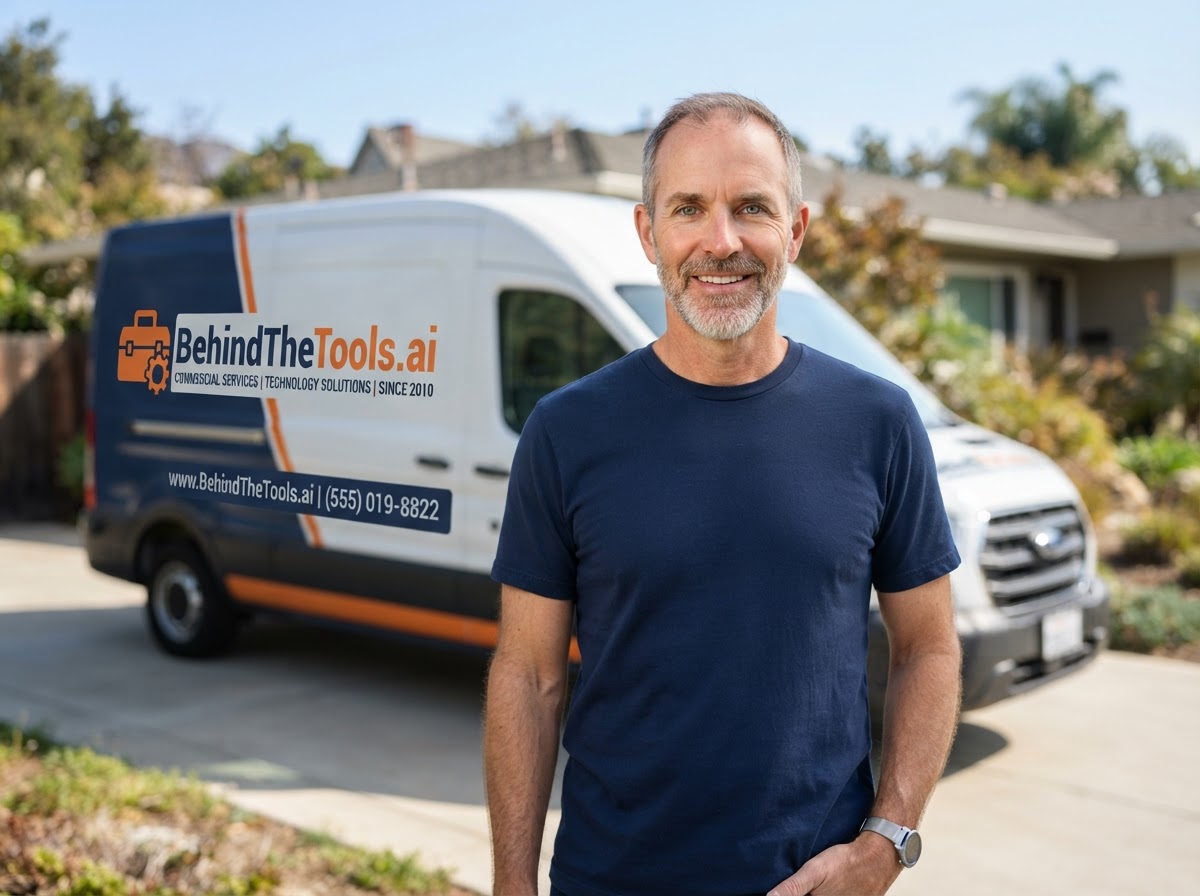
Shaun Steckler is the founder of BehindTheTools.ai. For over 23 years he hired and managed plumbers, HVAC techs, and electricians, and watched the best ones lose jobs to missed calls and quiet customer lists. He built BehindTheTools.ai to put done-for-you AI growth systems behind trade contractors so they stay booked out without hiring more people.
Read more from Shaun Steckler