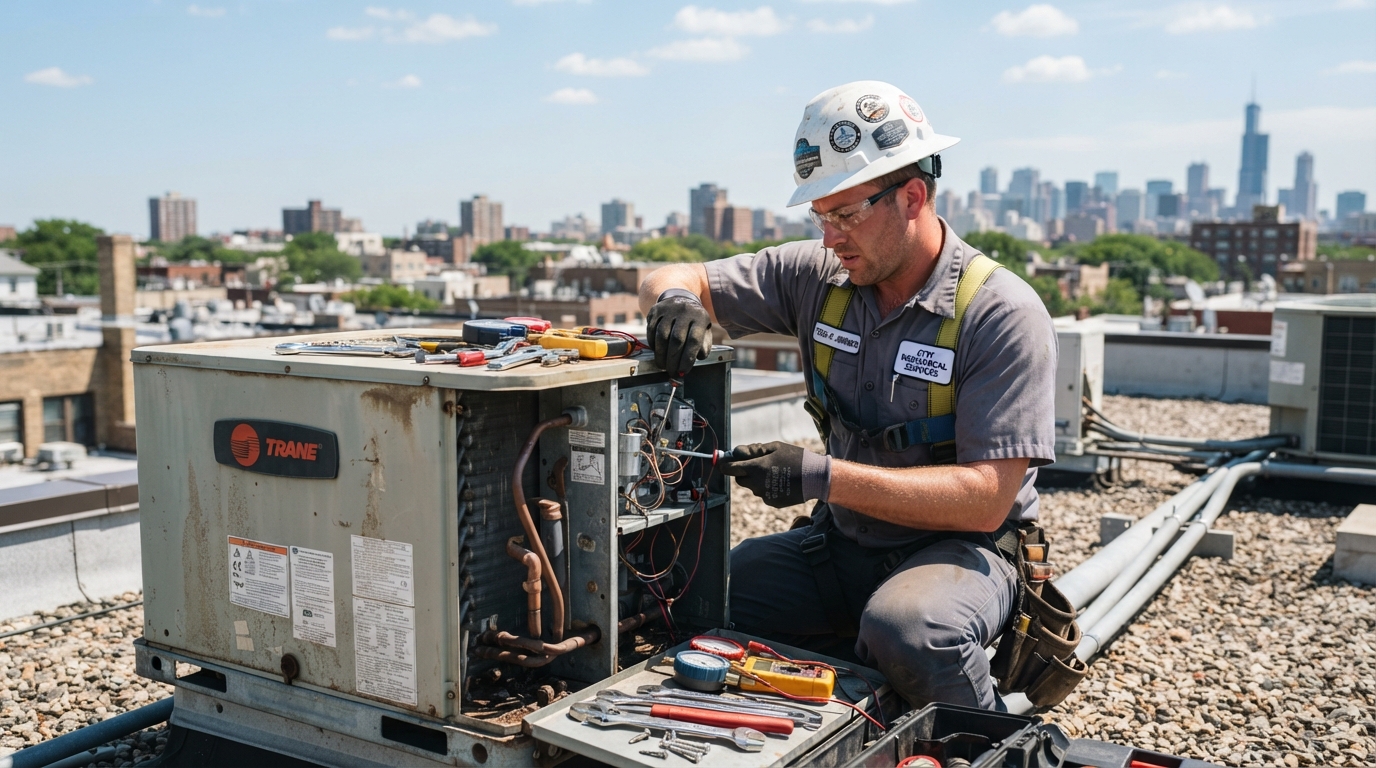
Peak season is when HVAC shops make 60% of their annual revenue — and when they miss the most calls. Here is why the busiest months are your most expensive leak.
Peak Season Is Your Most Expensive Leak
In HVAC, the money is made in two windows: the summer cooling rush and the winter heating panic. During these 8 to 12 weeks, your phone rings nonstop. Every tech is on a roof or in an attic. Your dispatcher is juggling 40 calls, 15 callbacks, and a board that changes every 20 minutes.
This is exactly when you lose the most money.
During peak season, a single AC replacement averages $5,000 to $8,000. A missed call during a heat wave is not a $50 service call — it is a $6,000 installation that went to the shop down the street. If you miss 15 calls during a July heat wave and half of those were full replacements, you just lost $45,000 in a week.
The cruel irony: the harder you work during peak season, the more calls you miss. The more calls you miss, the more money leaks away. You are booked solid but leaving six-figure revenue on the table.
The Five Ways HVAC Shops Lose Peak-Season Leads
1. Every tech is on a job. During peak season, nobody is sitting by the phone. Your techs are on rooftops, in attics, and under units. The dispatcher is the only one answering, and when they are on another call, the next caller gets voicemail.
2. After-hours emergencies. A furnace failure at 3 AM in January is a $2,000+ emergency call. If your phone goes to voicemail after hours, that customer is calling the next HVAC company on Google before the sun comes up.
3. Callback overload. During peak season, your voicemail fills up with callbacks you cannot return fast enough. By the time you call back — even an hour later — the customer has already booked someone else.
4. Slow quote follow-up. During peak season, replacement quotes pile up. A customer who requested a quote for a new system gets three quotes — yours arrives two days late because you are too busy to send it. They go with the company that responded first.
5. Maintenance plan customers get ignored. You have 200 maintenance plan customers, and during peak season you stop scheduling their tune-ups because emergency calls take priority. Those maintenance customers feel abandoned and do not renew — costing you recurring revenue for years.
Why Hiring More Staff Does Not Fix It
The instinct during peak season is to hire another dispatcher or bring on a seasonal receptionist. This creates three problems:
Cost: A dispatcher costs $3,500 to $4,500 per month. For a 12-week peak season, that is $10,000 to $13,000 — and they only work 8 hours a day, 5 days a week. The 3 AM furnace failure still goes to voicemail.
Training time: By the time a new hire learns your CRM, your pricing, and your service area, peak season is half over. You spent four weeks training someone who leaves in October.
Human bandwidth: Even a great dispatcher can only handle one call at a time. When three calls come in simultaneously during a heat wave, two go to voicemail. Hiring more people does not solve the capacity problem — it just moves it around.
How AI Call Capture Changes Peak Season
AI call capture solves every single peak-season problem at once. Here is what it looks like in practice:
A homeowner calls at 11 PM during a July heat wave. Their AC is out, it is 88 degrees inside, and they have a baby. The AI answers on the first ring, identifies the urgency, asks whether the system is completely dead or just blowing warm air, and books an emergency service slot for 7 AM the next morning. The customer gets an instant text confirming the appointment. You get a text summary of the call while you are sleeping.
When you wake up, the job is already on your board. The customer is not calling your competitors. The AI handled the triage, the booking, and the confirmation — all while every tech on your team was off the clock.
During the day, the same system handles overflow calls. When your dispatcher is on another line, the AI picks up, books the job, and logs it in ServiceTitan or FieldEdge. Your dispatcher never has to choose between the caller on hold and the customer at the counter.
Capturing the Replacement Quotes You Are Losing
During peak season, replacement quotes are where the big money is — and where the biggest leak is. A customer who calls three HVAC companies for a system replacement usually books with whoever responds first and feels most professional.
AI call capture does not just answer the phone. It can automatically send a follow-up text with your next available quote appointment slot, pre-qualify the lead (system age, brand, square footage), and schedule the in-home estimate — all before you ever pick up the phone.
This means every quote request gets an instant, professional response, even when you are on a roof. You stop losing $6,000 installations to the company that simply answered faster.
The Math: What Peak-Season AI Recovery Is Worth
Let us say your shop misses 20 calls per week during a 12-week peak season. That is 240 missed calls. If 40% of those were service calls at $350 and 10% were replacements at $6,000, here is the math:
96 service calls recovered at $350 = $33,600. 24 replacements recovered at $6,000 = $144,000. Total recovered revenue from peak-season call capture: $177,600.
That is not a projection. That is the actual value of calls you are currently missing during the 12 weeks that make or break your year.
The question is not whether you can afford to automate call capture during peak season. The question is whether you can afford not to.
Frequently Asked Questions
How does the AI handle a heat wave or cold snap when call volume spikes?
The AI handles unlimited simultaneous calls. Whether one call comes in or twenty at the same time, every single one gets answered, triaged, and booked. There is no queue, no hold music, and no capacity limit — which is exactly what you need during a peak-season surge.
Can the AI pre-qualify replacement leads during peak season?
Yes. The AI asks the right questions — system age, brand, square footage, whether it is completely dead or running but not cooling — and routes urgent calls to the front of the board while scheduling non-urgent tune-ups for the following week.
Does the system work with ServiceTitan and FieldEdge?
Yes. Every call creates a job entry directly in your CRM. Your dispatcher sees the same board they always see — the AI just fills it automatically instead of leaving gaps where missed calls used to go.
What happens to maintenance plan customers during peak season?
The AI can automatically text maintenance plan customers to schedule their tune-up for the off-season, keeping the relationship warm without clogging your peak-season board. They feel valued, and you protect your recurring revenue.
Put This Into Action
Turn what you just read into recovered revenue. Explore the AI systems behind these results: