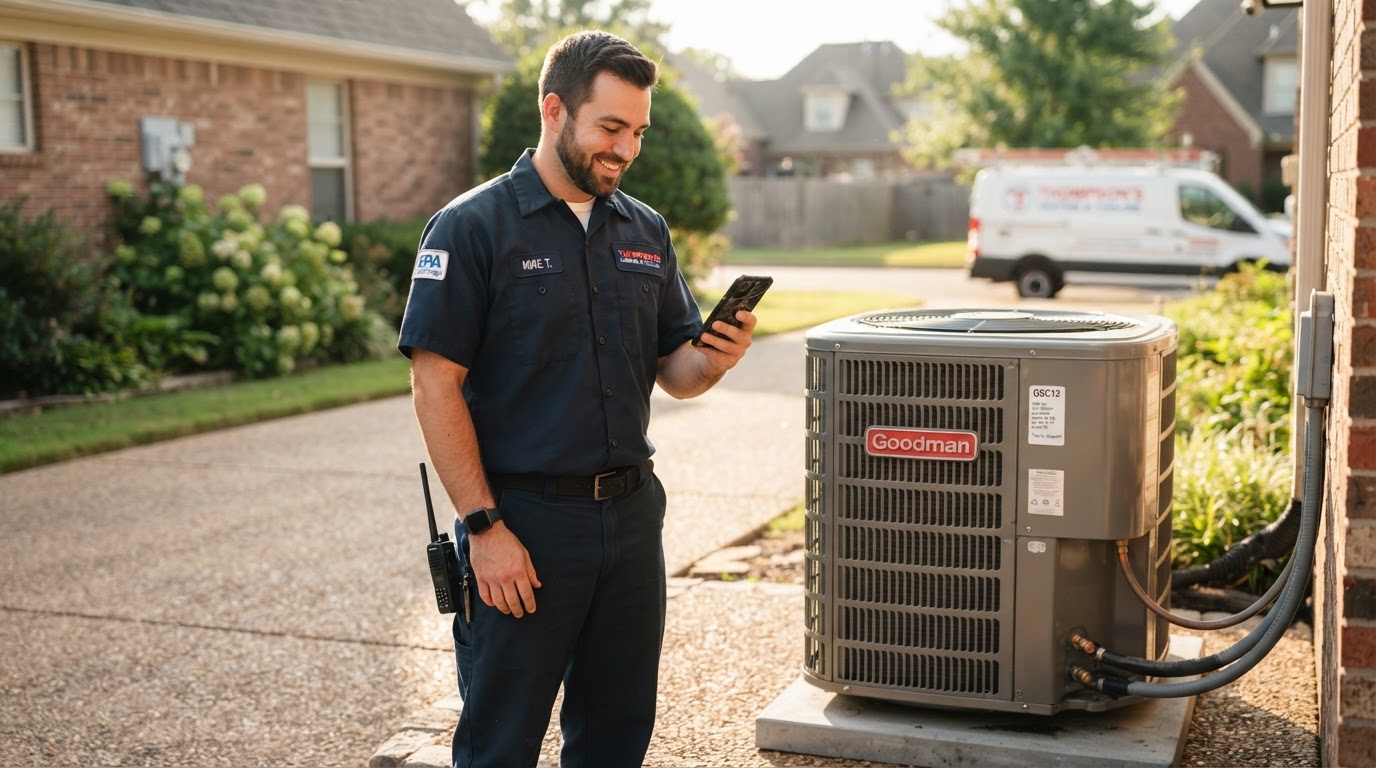
An AI answering service for an HVAC company should pick up every call 24/7, sort emergencies from routine calls, book jobs onto your calendar, and hand gas leaks and no-heat calls to a person. Here's what to expect, what it costs, and how to test it before peak season.
This guide explains what to expect from an HVAC answering service, which calls should never stay with the AI, how the main options compare, what owners report after trying them, and how to test any system before peak season.
What is an AI answering service for HVAC companies?
An AI answering service is software that answers your business line with a natural-sounding voice, has a real conversation with the caller, and takes action. Instead of writing down a message like a basic answering service, it can ask the questions your dispatcher would ask, offer open appointment times, book the job, and text the customer a confirmation. Many also text back anyone whose call you miss, so the conversation keeps going even if the caller hangs up.
For HVAC shops, the value shows up on the days your phone rings the most: the first heat wave, the first hard freeze, and every evening and weekend in between. Those are the calls most likely to go to whoever answers first.
What should an HVAC AI answering service do on every call?
At a minimum, it should:
- Answer every call, day or night, including several at once during a heat wave or a freeze
- Ask HVAC questions: Is it heating or cooling? Furnace, heat pump, or AC? What is it doing? How old is the system?
- Spot urgency: no heat, no cooling in extreme weather, water leaking from the unit, or anyone elderly, sick, or very young in the home
- Book routine service, tune-ups, and replacement estimates onto your calendar while the caller is on the line
- Send a text confirmation with the appointment time
- Text back callers who hang up or reach voicemail
- Hand the call to a person when the caller asks for one or when your emergency rules say so
- Save the recording, the transcript, and the job details where your team can see them in the morning
If it only takes messages, it's voicemail with extra steps. One owner on Reddit put it this way: what annoys customers "isn't that it's AI, it's when the AI is a dead end." (Reddit r/smallbusiness)
Which HVAC calls should always go to a person?
Write these rules down before you turn anything on. A contractor in r/Ai_in_trades suggested hard-coding the "wake-up" rules: "gas smell or CO alarm, no heat in dangerous weather, vulnerable occupants, active leak or electrical risk, repeat callback, or any caller the agent can't classify with confidence." (Reddit r/Ai_in_trades)
The same post adds a second rule worth copying: let the AI collect details, but don't let it quote prices or promise an arrival time unless dispatch has confirmed the slot. For a gas smell or a CO alarm, the AI should also tell the caller to leave the house and call the gas company or 911 before it does anything else.
What are your options for answering HVAC calls?
| Option | Answers 24/7 | Books jobs on the call | Handles emergency rules | Who sets it up | How it's usually billed |
|---|---|---|---|---|---|
| Voicemail or forwarding to your cell | No | No | Only if you pick up | You | Free, but you lose callers who won't leave a message |
| Live answering service | Yes, on most plans | Sometimes, often as an add-on | Follows a script you give them | You and the service | Per call or per minute, plus add-ons |
| Standalone AI receptionist app | Yes | Usually, if connected to your calendar | If you configure it | You | Per call, per minute, or flat monthly |
| Done-for-you system | Yes | Yes | Built and tested for you | The provider | Usually a monthly fee |
A live answering service gets a human voice on the line, which some customers prefer. The catch is cost at volume and whether the agent can actually book. A standalone AI app can be inexpensive, but you'll spend time setting it up and connecting it to the rest of your tools. A done-for-you system costs more than a do-it-yourself app, but someone else builds the call flows, connects them to how your shop already runs, tests them, and keeps tuning them. For a deeper side-by-side of AI versus human answering, read AI Receptionist vs Virtual Receptionist for Contractors.
How much does an AI answering service for HVAC cost?
Prices vary more by billing model than by brand. A few published examples, checked in October 2026:
- Smith.ai's live, human-first plans start at $300 a month for 30 calls, with $11.50 for each extra call. Booking appointments is an extra $1.50 per call.
- NextPhone says its AI receptionist plans start at $199 a month with unlimited calls.
- Comparison sites list entry-level AI plans under $50 a month with small call allowances. Enterprise HVAC platforms often don't publish prices at all. (aifrontdesklist.com)
Here's the part most price lists skip: HVAC call volume isn't steady. If you pay per call or per minute, your bill rises right when your phone is busiest, and a plan that pauses or caps calls can leave you uncovered in the first heat wave. Before you buy, ask three questions:
- What will my bill be in my busiest month, not my average month?
- Are booking, text confirmations, call recordings, and transfers included, or are they add-ons?
- What happens when I go over my plan: do calls keep getting answered, or does the service stop?
For a broader breakdown of pricing models and ROI, read How Much Does AI Call Answering Cost for Home Service Businesses.
What do HVAC owners say after trying AI answering?
Owners who've used it are mostly positive about after-hours coverage, and honest about the setup work:
- Setup takes real effort. One HVAC owner on r/hvacpeople said it "took me 3 weeks to get the knowledge base right and train it on our common scenarios," and still called it "worth it for HVAC emergency calls." (Reddit r/hvacpeople)
- Start narrow. Another commenter in the same thread advised: "triage the call, capture the lead, book if possible, escalate true emergencies via SMS to whoever's on call."
- Vague calls are the hard part. A commenter in r/smallbusiness noted that urgent calls are actually the easy case, and that calls like "my furnace is making a noise, is that bad" are where weak systems struggle. (Reddit r/smallbusiness)
- Check that the job actually lands. As one contractor put it, "a polite conversation that never creates the job is still a missed call." (Reddit r/Ai_in_trades)
The lesson is the same in every thread: the AI is only as good as its setup, its emergency rules, and whether anyone checks the results.
Why does a done-for-you system matter for a small HVAC shop?
Answering the phone is only the first step. The call still has to turn into a booked job, a finished job should lead to a review request, and last year's customers should hear from you before the season starts. Every handoff between those steps is a place where a lead can slip. A done-for-you system ties answering, texting, booking, and follow-up together and connects them to how your shop already runs, so:
- The AI books onto the calendar your team already looks at
- Every call, text, and booking is saved with the customer's details and the full conversation
- A finished job can trigger a Google review request automatically
- Customers who haven't called in a year can get a tune-up reminder before the season starts
- Someone else builds it, tests it, and keeps it tuned, so you don't have to
That matters more for a three-truck shop than for a big operation with a full office staff, because nobody has time to babysit a phone system in July. To see how review requests and reactivation fit in, read about Google review requests and customer reactivation.
How do you test an HVAC answering service before peak season?
Make these calls yourself, from a phone the system doesn't recognize, before you trust it with real customers:
- No heat with a baby at home, at 11 PM. It should treat the call as urgent and reach your on-call tech right away.
- "I smell gas." It should tell the caller to leave the house and call the gas company or 911, then alert a person.
- AC out on a hot afternoon. It should get the system type and symptoms, then book the next real opening.
- Tune-up request. It should book a routine visit without sending it to your emergency line.
- Replacement estimate on a 15-year-old system. It should book an estimate visit, not a repair call.
- "My furnace is making a noise." It should ask follow-up questions instead of guessing.
- An address outside your service area. It shouldn't book a job you can't take.
- Hang up during the greeting. You should get a text back within a minute.
After each call, check that the job, the address, the notes, and the recording all show up where your team will see them. Fix what fails and test it again. This checklist works for any service, including ours.
Where does BehindTheTools.ai fit?
BehindTheTools.ai is a done-for-you AI automation agency for plumbing, HVAC, and electrical contractors across the U.S. For HVAC companies, we build and run the system for you on GoHighLevel, and it works on your existing business number. It covers 24/7 AI call and text answering, missed-call text-back, calendar booking, automated Google review requests, and maintenance and replacement reactivation campaigns. We set everything up, connect it to how your shop already runs, and write and test the call flows and emergency rules. Emergencies are flagged and pushed to your dispatch phone right away, and there's no long-term contract.
See how it works for HVAC companies, or read Why Your HVAC Shop Loses Leads During Peak Season and our overview of missed call recovery.
Frequently Asked Questions
What is the best AI answering service for HVAC companies?
The best one for your shop answers every call 24/7, asks HVAC-specific questions, books real jobs onto your calendar, sends emergencies to your on-call tech, and saves every call and booking where your team will see it. Compare options by what they cost in your busiest month, whether booking and transfers are included, and how they handle calls they don't understand.
Can an AI answering service handle HVAC emergencies?
Yes, if it's set up with clear emergency rules. It should recognize no-heat and no-cool calls, gas smells, carbon monoxide alarms, water leaks, and vulnerable people in the home, and send those calls to a person right away. It shouldn't promise an arrival time unless dispatch has confirmed one.
How much does an AI answering service for HVAC cost?
It depends on the billing model. Published examples in October 2026 range from AI plans under $50 a month with small call allowances to flat plans around $200 a month, while live human answering starts around $300 a month for 30 calls. Per-call and per-minute plans cost the most in peak season, so ask for the price at your busiest month's volume.
Is an AI answering service better than a live answering service for HVAC?
For most small and mid-size shops, AI is better for after-hours and overflow calls because it answers instantly, can book jobs on the call, and costs less at high volume. A live service can be a good fit if your callers strongly prefer a human or your calls need a lot of judgment. Some shops use both: AI first, with a person for emergencies.
Will customers know they're talking to AI?
Some will, and that's fine if the AI is helpful. Customers get frustrated when the AI is a dead end that can only take a message. A greeting that gets straight to the problem, a quick booking, and an easy way to reach a person keep most callers on the line.
Will this work with the software I already use?
Yes. We set everything up for you and connect it to how your shop already runs. BehindTheTools.ai builds and runs the system for you on GoHighLevel, and it works on your existing business number, so your customers keep calling the number they already know.
Find Out How Many HVAC Calls You're Missing
Before you pick any answering service, find out how many calls you're missing and what they're worth. Book a free AI Checkup and we'll show you how many calls, quotes, and past customers are slipping through, and what it would take to recover them before the next heat wave or freeze. Or call (337) 344-3177.
Put This Into Action
Turn what you just read into recovered revenue. Explore the AI systems behind these results:
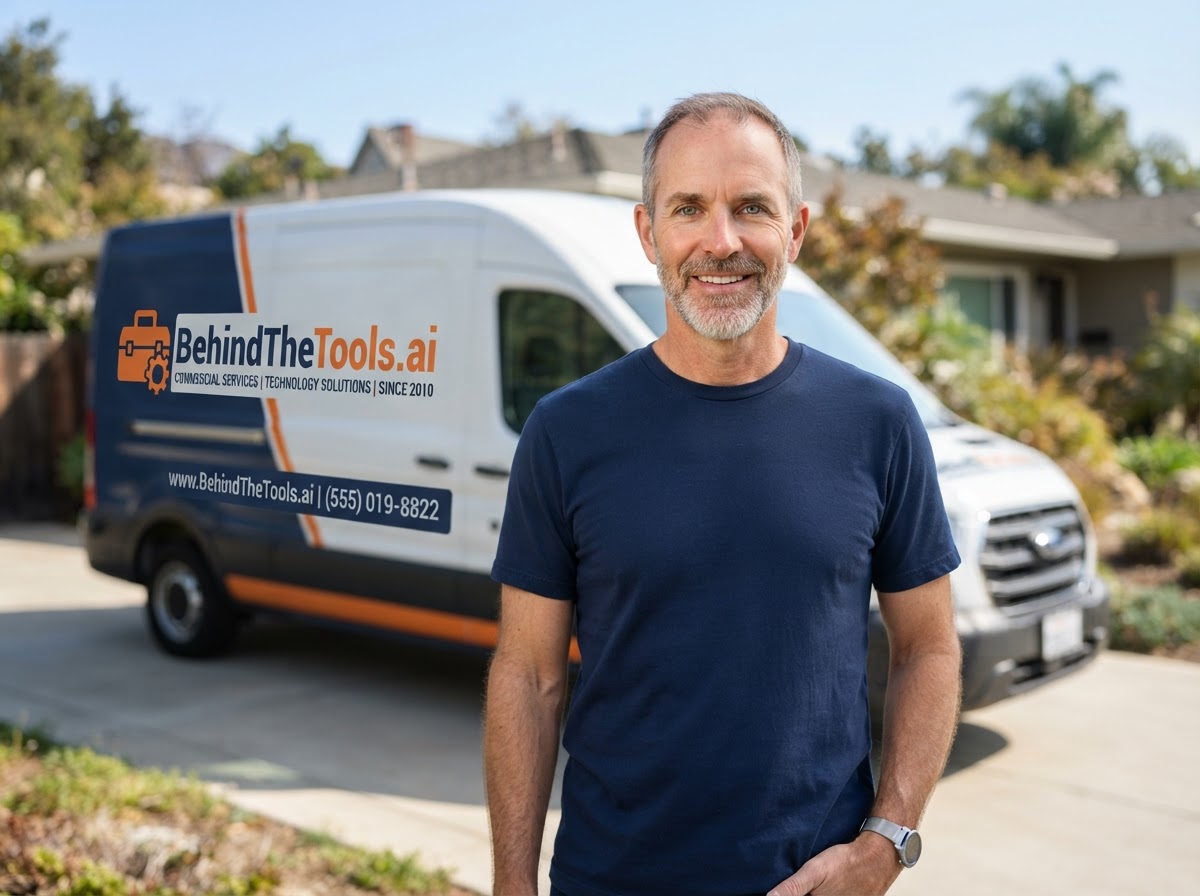
Shaun Steckler is the founder of BehindTheTools.ai. For over 23 years he hired and managed plumbers, HVAC techs, and electricians, and watched the best ones lose jobs to missed calls and quiet customer lists. He built BehindTheTools.ai to put done-for-you AI growth systems behind trade contractors so they stay booked out without hiring more people.
Read more from Shaun Steckler